IB Geography
Study of physical and human geography with focus on spatial patterns and sustainability.
IB Geography investigates the relationship between physical environments and human societies. Students develop skills in geographical inquiry, fieldwork, and spatial analysis while exploring issues of sustainability and global change. The current course was first assessed in 2019.
Why Geography Matters
Your grade in IB Geography counts toward the 45-point Diploma, and many university courses ask for a particular grade in the subject, often at Higher Level.
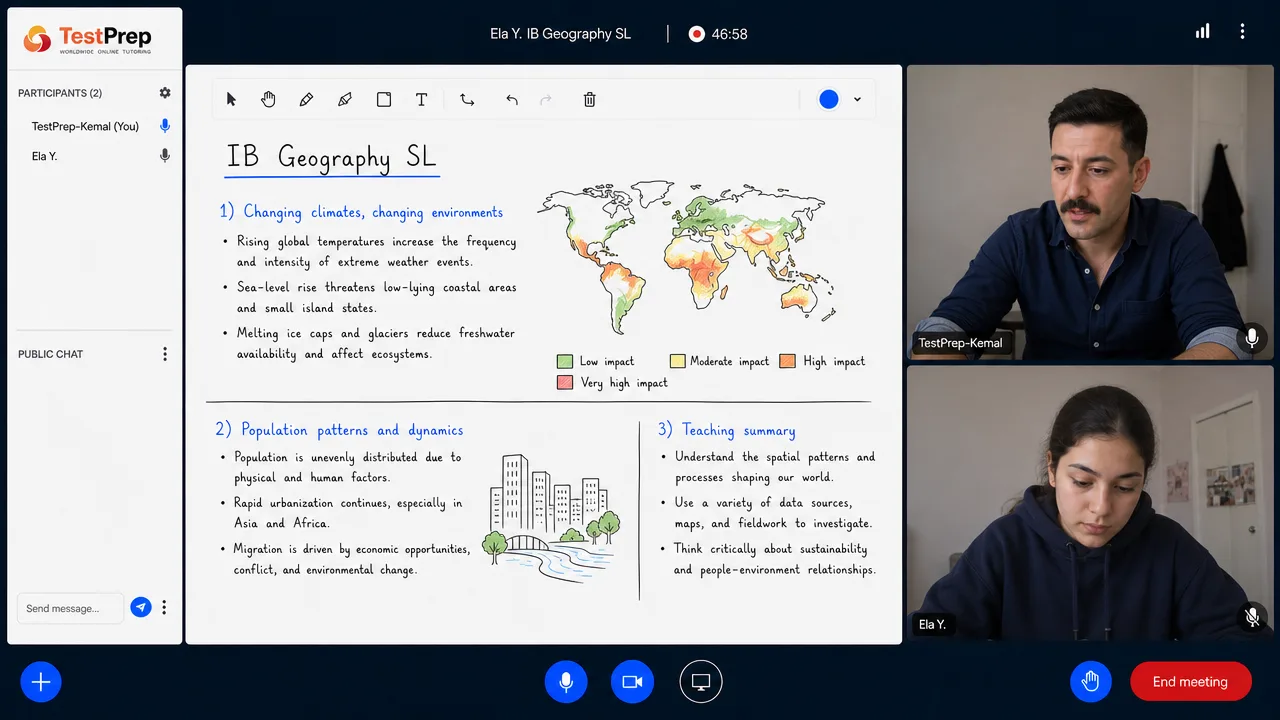
SL covers the SL and HL core, two optional geographic themes and fieldwork in 150 hours.
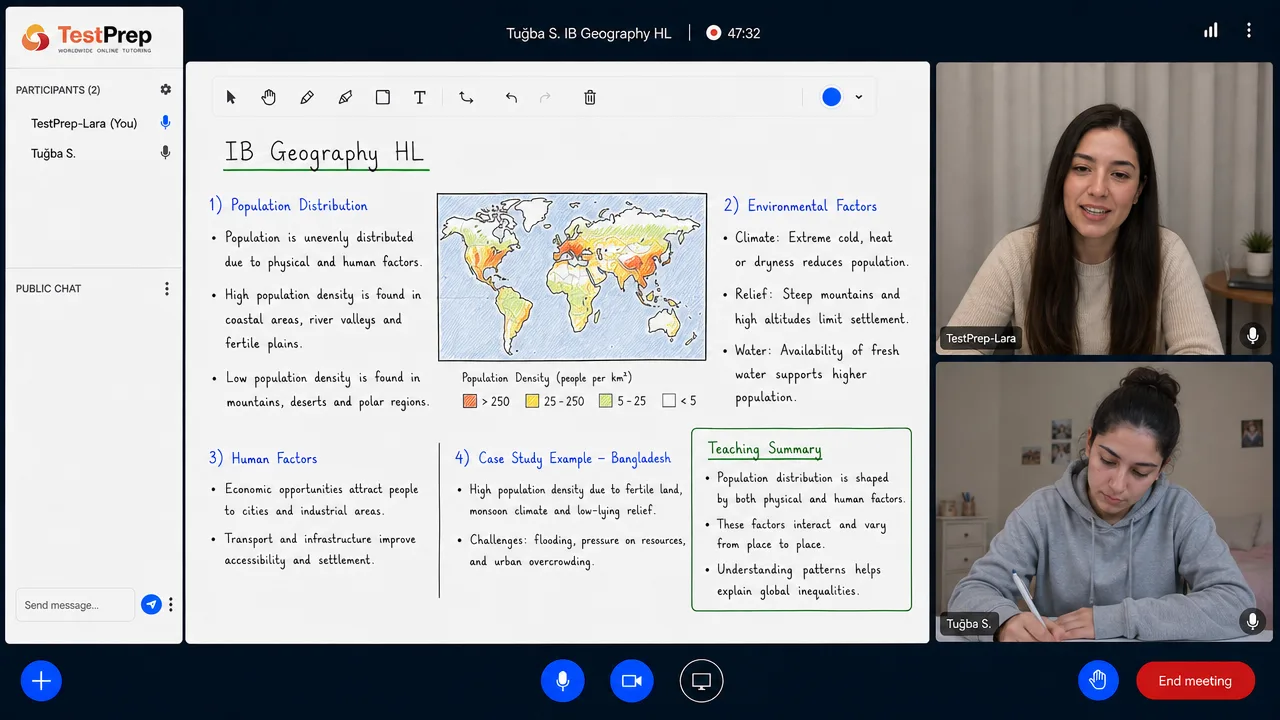
HL adds a third optional theme and the HL core extension on global interactions, assessed in Paper 3, in 240 hours.
Career Pathways
Geography syllabus topics
The topics of the subject guide. Lessons follow your school's order and level.
- Population dynamics
- Global migration
- Population policies
- Climate processes
- Climate change
- Adaptation and mitigation
- Resource distribution
- Consumption patterns
- Sustainability
- Freshwater
- Oceans and coastal margins
- Extreme environments
- Geophysical hazards
- Leisure, tourism and sport
- Food and health
- Urban environments
- Power, places and networks
- Human development and diversity
How lessons approach Geography
Understanding the concepts, and answering the papers the way the markscheme rewards.
- Learn case studies in detail
- Understand geographic models and theories
- Develop map and data skills
- Connect local and global scales
- Practice data response questions
- Structure essays with case study evidence
- Prepare fieldwork investigation carefully
- Master geographic terminology
Past papers and markschemes
IB Geography past papers, used in lessons alongside the questions from your own school.